This is the third article in our Writers’ Rooms series — three rooms at Sicilia Encantada, each named after a Sicilian writer who changed literature. Room Verga. Room Sciascia. Room Pirandello..
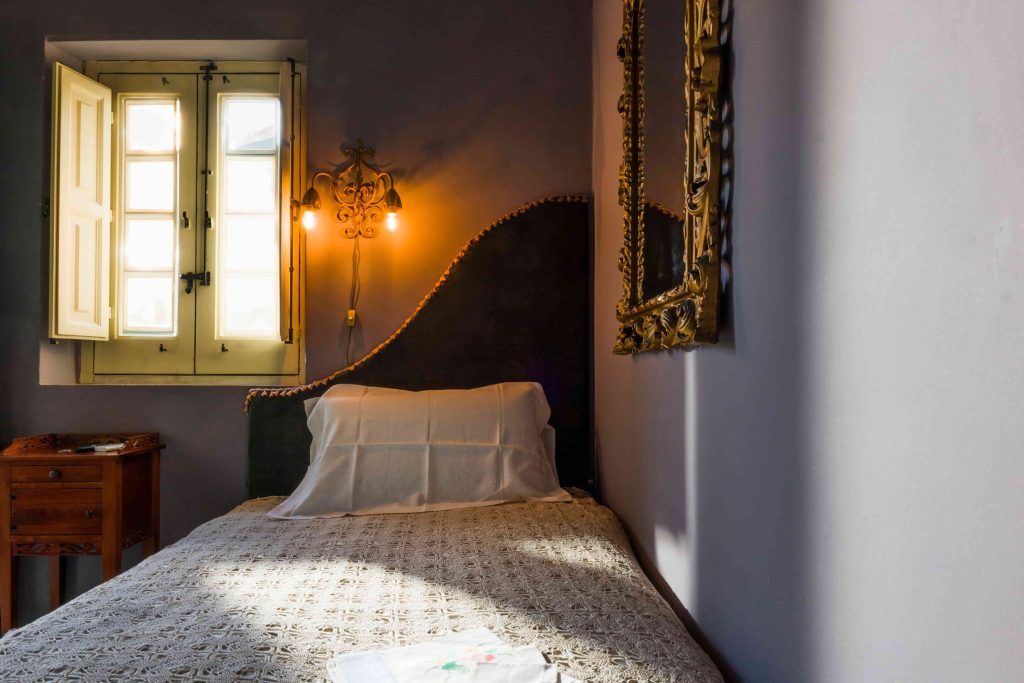
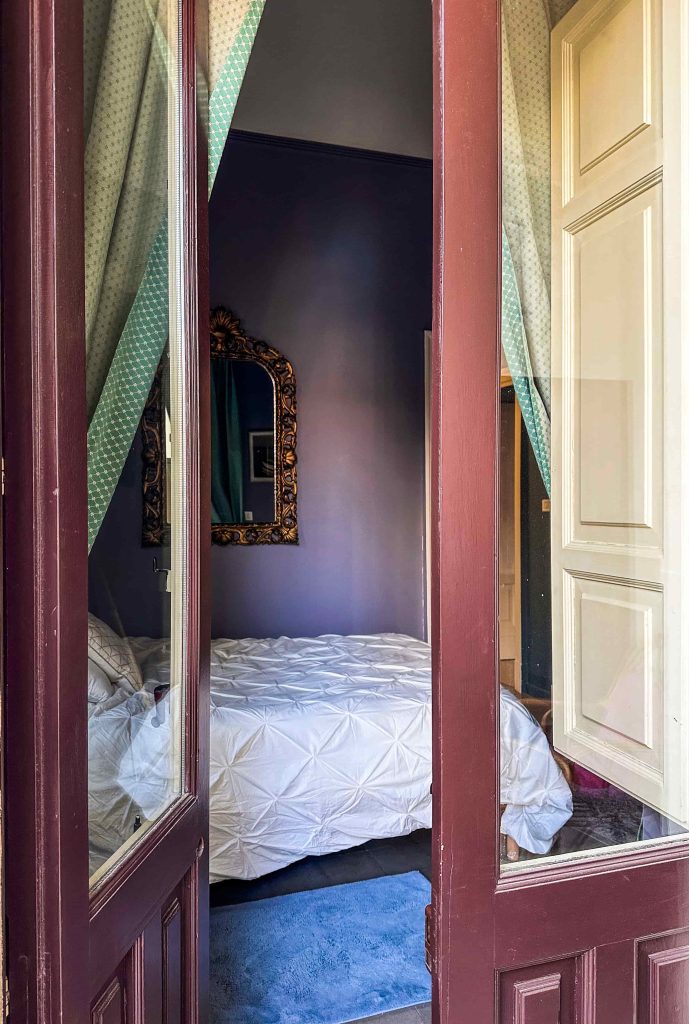
There is a room at Sicilia Encantada painted in a deep aubergine, almost the colour of dusk. The headboard is dark too, its curved silhouette edged in a thin rust-orange trim, like a stage curtain caught mid-fall. An antique gilded mirror leans against the wall beside it, ornate and slightly worn, catching whatever light comes through the shutters. In the corner, a carved wooden armchair with clawed feet holds a single burgundy velvet cushion — the kind of chair that looks like it is waiting for someone to sit down and become a different person. The floor is dressed in the palazzo’s original tiles, patterned in deep red and black.
Photos by Giovanni Ruggeri https://bottegaruggeri.it
And just outside, behind a wrought-iron gate, Room Pirandello has something the other rooms don’t: its own private terrace, for the exclusive use of whoever is staying inside. A rattan table for two sits tucked under the arch of the courtyard, ready for a glass of something cold at the end of the day — no other guests passing through, no one else’s schedule to work around. It is the one place in the apartment where the mask can come off entirely, in the open air, with nobody watching.
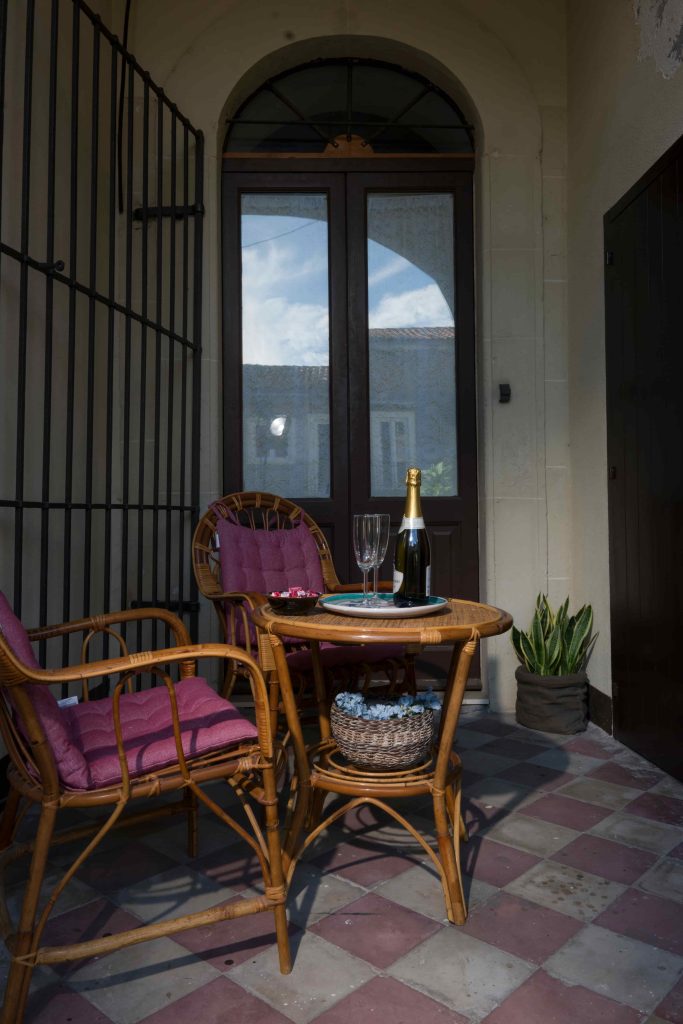
Photo by Giovanni Ruggeri https://bottegaruggeri.it
The Writer Behind the Room
Luigi Pirandello was born in 1867 in a country house his family called “Caos” — Chaos — on a windswept plateau above the sea, just outside Agrigento. He liked the coincidence. “I am a son of Chaos,” he wrote, and not as a figure of speech: it was the real name of the place.[1]
He spent his life asking a single, uncomfortable question: is anyone really one person? In his 1908 essay “L’umorismo,” he argued that what looks tragic from one angle looks absurd from another, and that most of what people call their “character” is a mask assembled for other people’s benefit. He built an entire body of work on that idea. In “Il fu Mattia Pascal” (1904), a man reads his own obituary and tries to build a new identity from scratch — and fails, because a person without a fixed self has no place in the world either. In “Sei personaggi in cerca d’autore” (1921), six characters walk onto a stage looking for someone to finish writing them, and the play is really about how little control any of us has over the story other people tell about who we are.[2]
He pushed the idea to its limit in his last novel, “Uno, nessuno e centomila” (1926). Its protagonist, Vitangelo Moscarda, notices one day that his wife sees his nose as slightly crooked — a detail he had never noticed about himself. The discovery unravels him: if everyone who knows him carries a different, private image of who he is, then he is not one person but a hundred thousand, and, stripped of any single fixed self to hold onto, ultimately no one at all. Pirandello never resolved the problem. He simply insisted that it was real.[3]
The Swedish Academy awarded him the Nobel Prize in Literature in 1934, citing his bold renewal of dramatic and scenic art. He died two years later, in Rome, having asked that his ashes be brought back to Sicily and kept simply, without ceremony, near the countryside where he was born.[4]
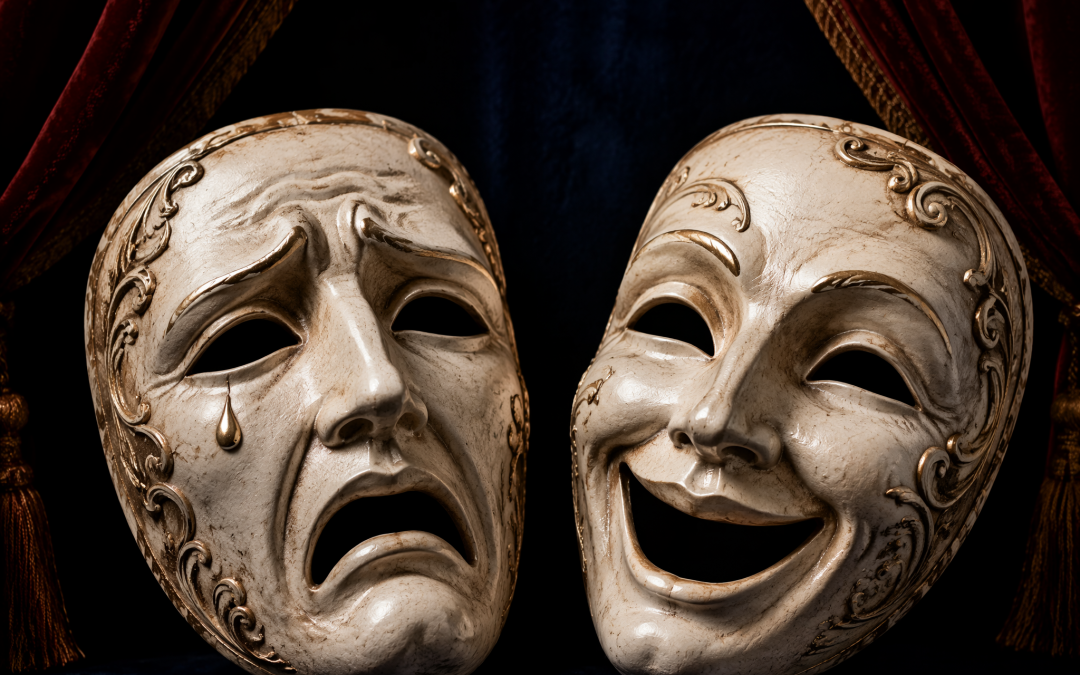
A room named for him is, inevitably, a room about masks and about the difference between the face a place shows the street and the one it keeps for whoever actually stays inside it.
Visiting Pirandello’s Sicily
Pirandello’s birthplace still stands in the countryside of Caos, near Agrigento — a rural house of the late 1700s, now a museum run by the Regione Siciliana, holding personal objects, photographs, letters, and first editions with the author’s own dedications.[5][6] A short path leads from the house to the centuries-old pine tree where Pirandello liked to sit and write, and where, at his own request, his ashes were laid to rest in 1961.[5][6] The museum is open daily, roughly 9:00 to 19:30 depending on the season; admission is a few euros.[7]
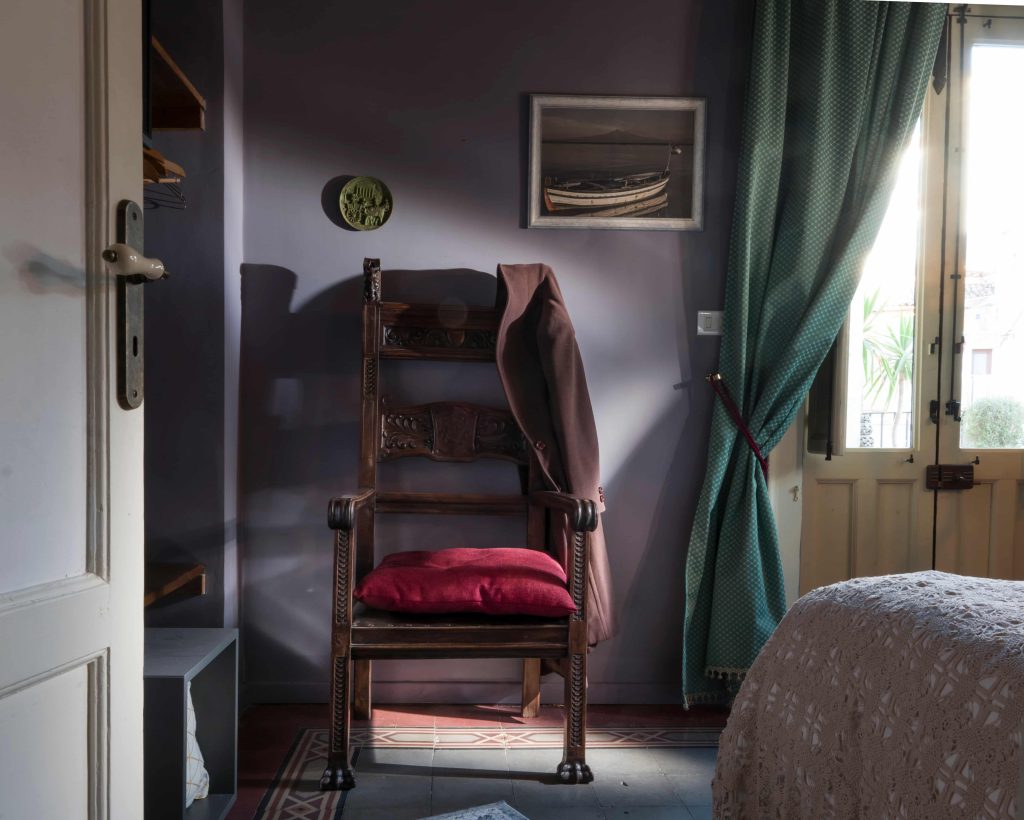
Photo by Giovanni Ruggeri https://bottegaruggeri.it
It sits on the other side of Sicily from Catania, near the Valley of the Temples — worth combining with a visit to that site.
Reserve your stay at Sicilia Encantada — https://www.siciliaencantada.com
References
1. Giudice G. Luigi Pirandello. Torino: UTET; 1963.
2. Pupino AR. Pirandello: poetiche e pratiche di umorismo. Roma: Salerno Editrice; 2013.
3. Pupino AR. Pirandello o l’arte della dissonanza. Saggio sui romanzi. Roma: Salerno Editrice; 2008.
4. Luigi Pirandello – Facts. NobelPrize.org [Internet]. Available from: https://www.nobelprize.org/prizes/literature/1934/pirandello/facts/ello – Facts. NobelPrize.org [Internet]. Available from: https://www.nobelprize.org/prizes/literature/1934/pirandello/facts/
5. Casa Museo Luigi Pirandello – official site. Regione Siciliana [Internet]. Available from: https://casamuseopirandello.it
6. Casa di Pirandello. Ministero della Cultura [Internet]. Available from: https://cultura.gov.it/luogo/casa-di-pirandello
Photo credits
Photography by Giovanni Ruggeri — https://bottegaruggeri.it. Featured image: AI-generated (Skywork AI) — no photographer credit needed, but flag it as AI-generated if your platform or region requires disclosure.
Room Pirandello asks you to notice which version of yourself checks in, and which one checks out.